
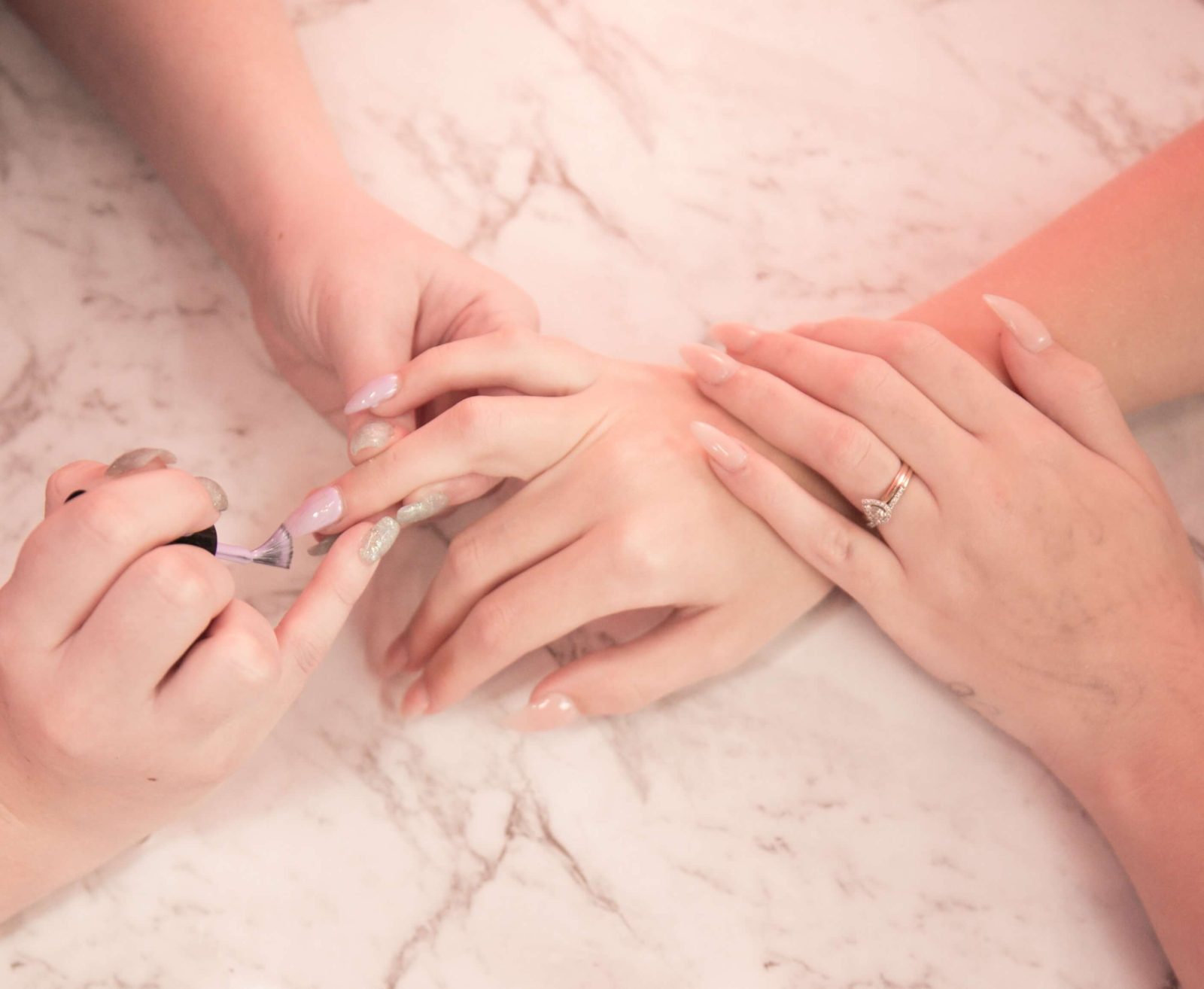
The term ‘gel nails’ can cover a tonne of different nail modifications. You’ve got Gel-X nails, soft gels, hard gels, gel effect polish, shellac, BIAB – and the list goes on and on and on!
As a nail technician, you’ll need to understand all of the different gel nail types so you can provide the best service to your clients, and boost your appeal to prospective clients. That’s where we come in. We’re here to walk you through the different types of gel nails so you can easily meet your customers’ needs.
*This site contains product affiliate links. We may receive a commission if you make a purchase after clicking on one of these links.*
Hard gel nails

Hard gel nails refer to a type of nail enhancement that’s used for extensions, overlays, or even nail repairs. They are applied using a thick, gel-like substance that hardens when exposed to UV or LED light. This curing process creates a strong, durable, and long-lasting finish.
How are hard gel nails applied?
You’ll generally see hard gel come in a little pot and it’s usually applied with a brush. When you’re applying hard gel nail extensions, you’ll usually use nail forms rather than tips to extend the length. It’s very satisfying to watch!
Here’s a great example:
How are hard gel nails removed?
The removal of hard gel nails typically requires soaking in acetone and the use of a coarse nail file or an e-file. As the nail tech, you’ll need to learn how to remove hard gel safely to avoid causing damage to the natural nail whilst adequately preparing your client for their next appointment. There’s nothing worse than your customer turning up with a horrible removal from their previous set!
Is BIAB the same as hard gel?
Essentially, yes! Builder in a bottle, BIAB, builder gel, or whatever you want to call it, is a type of hard gel. However, this is generally not used for extensions but instead used to help protect the natural nail so that it can grow to the desired length naturally.
The term ‘Builder in a Bottle’ was created by The Gel Bottle for their own-brand nail treatments and hard gels. The phrase has taken the nail world by storm, so you might see similar offerings from other brands, but BIAB strictly refers to The Gel Bottle’s products only.
Is hard gel the same as acrylic?
Whilst they may offer similar finishes, hard gel is not the same as acrylic. Hard gel cures via a UV or LED light, whereas acrylic hardens through evaporating solvents. Some of the other key differences include:
- Hard gel is more flexible than acrylic
- Acrylic is applied via a powder (polymer) and a liquid (monomer)
- Acrylic has a stronger odour than hard gel
- Hard gels are self-levelling, whereas acrylic is shaped and levelled via a brush
Hard gel nail brands
There are a whole host of hard gel nail brands for you to choose from, here are some of the common ones you may have heard of:
Soft gel nails

They’re more flexible and tend to be used for overlays on natural nails. They’re cured under UV or LED gel nail lamps. Unlike hard gel nails that cure to a hard and sturdy state, soft gel nails remain more flexible after curing. The flexibility of soft gel makes them ideal for overlays on natural nails, providing added strength and protection without the rigid feel of hard gel. Soft gel nail polish can also be applied on top of acrylic nails or other nail extensions for a long-lasting finish.
How are soft gels (also known as soak-off nails) applied?
You can apply soft gel polish in the same way you’d apply regular polish, with a few additional steps involved. The process generally includes:
- Preparation:
- Start by cleaning the natural nails to remove any existing polish or oils.
- Trim and shape the nails according to the client’s preference.
- Cuticle care:
- Gently push back the cuticles or use a cuticle remover to create a clean nail surface.
- Nail dehydration:
- Apply a nail dehydrator or primer to remove any remaining oils and improve adhesion.
- Base coat:
- Apply a thin layer of soak-off gel base coat to the nails. Ensure the product is evenly distributed and covers the entire nail surface.
- Curing:
- Cure the base coat under a UV or LED lamp according to the manufacturer’s instructions. Curing times may vary based on the specific gel product being used.
- Colour application:
- Apply the first layer of soak-off gel colour, making sure to coat the entire nail evenly. Cure the colour layer under the lamp.
- Repeat the process if additional colour layers are desired, curing each layer.
- Top coat:
- Apply a thin layer of soak-off gel top coat to seal and protect the colour. Cure the top coat under the lamp.
- Final cure:
- After applying the top coat, perform a final cure under the UV or LED lamp to ensure that all layers are fully cured.
- Cleaning:
- Wipe off the tacky or sticky residue on the nails using a lint-free wipe soaked in a gel cleanser or rubbing alcohol.
- Final shaping:
- Shape the nails if necessary and buff for a smooth finish.
How are soft gel nails removed?
The process for removing soft gel nail polish is similar to removing hard gel polish, however, you should never use an e-file, as the polish isn’t thick enough. If you do, you run the risk of damaging the client’s natural nails.
Usually, a thorough soaking in acetone, a coarse nail file and/or a cuticle pusher should be enough to get the gel polish off efficiently. If not, simply give the nails another soak and be patient to avoid causing unnecessary damage to the nail bed.
Common soft gel nail brands
Some of the common soft gel brands you may have come across include:
How much should you charge for gel nails?
Gel nail prices vary depending on your level of experience, location and the gel system you’re using. For example, brands like Mylee and Bluesky are generally more affordable than salon brands like Glossify and Glitterbels.
This guide from Wecasa gives you a rough idea of prices around the UK:

NB: Babyboomer = ombre nail design.
Which of the gel nail types should you train in?
So now you’re well versed in the different types of gel nails, which option tickles your fancy? To increase your attractiveness and profitability as a nail tech, it’s crucial to offer a wide range of services. This can include learning how to apply both hard gel and soft gel nails.
On the other hand, if you specialise one area, you’ll be able to perfect your craft, charge higher rates and become an expert in your field. The choice is yours!
Excited to try out gel nail application? Read our guide on how to become a gel nail tech to upskill!
Read more blogs…

Is MelodySusie a good brand? A no-fluff review
If you’re deep in a DIY nail era or you’re a beginner nail tech looking for affordable ways to bump up your kit. The chances are, you’ve stumbled across MelodySusie. Maybe it was a TikTok of someone turning their kitchen table into a mini salon, or maybe you’re just tired of overpaying at the nail…


A Mylee Gel Polish Review: Is Mylee Gel Polish Good?
Mylee gel polish offers an extensive range for at-home and salon nail care. The gel base and top coats, Santorini Rooftops, and So Nude are praised for affordability and durability, with slight variation in texture and scent. Find out how they fare in this mylee gel polish review!

Acrylic nail designs that will turn heads in 2026
Ready to level up your mani game? Our latest blog rounds up the best acrylic nail designs for 2025—from bold shapes to dreamy colours and trending nail art. Whether you’re into minimalist chic or full-on glam, there’s something here to inspire your next salon visit. Your dream nails start here! 💅✨